Case study
Logbook
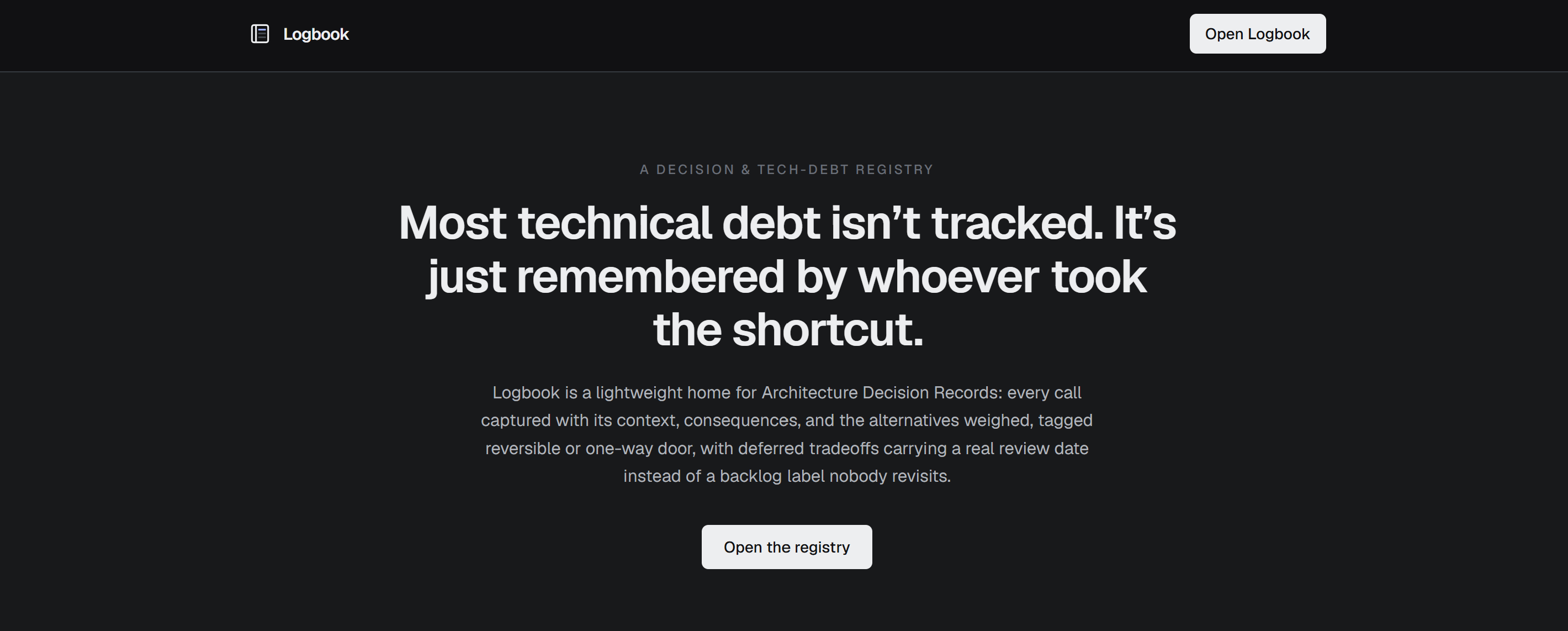
A decision and tech-debt registry built around a single idea: reversibility, not a backlog label, is what should decide how much scrutiny a decision gets.
Role: Design and build, solo
Stack: Next.js, TypeScript, Zustand, Supabase, Vitest
Why it exists
The problem this was built to solve, and the approach behind it.
Most technical debt gets logged as a ticket, and tickets do not age well.
Logbook is modeled on the Architecture Decision Record format.
What it does
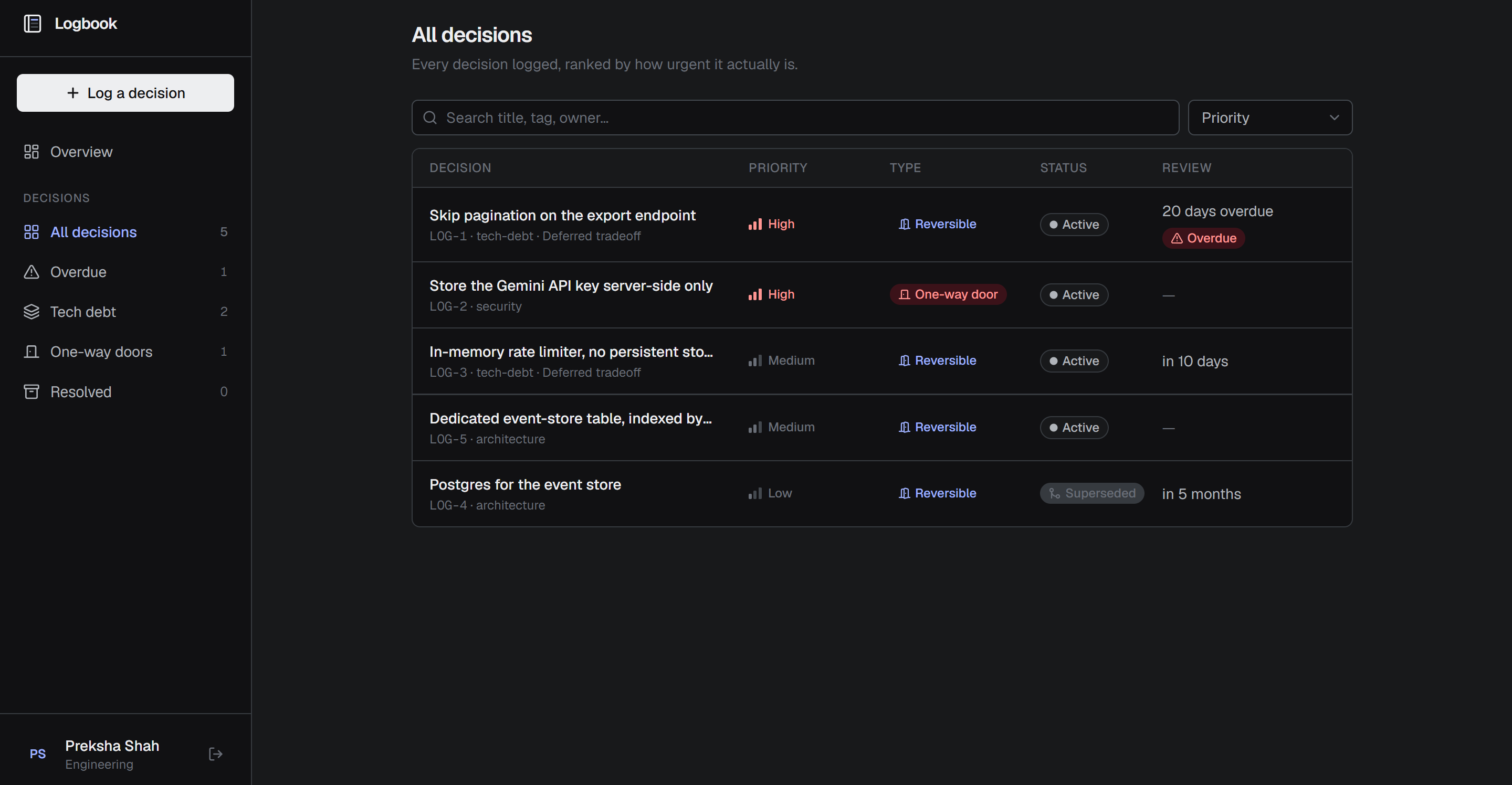
- A public homepage paired with a full decision registry app
- Log a decision with context, consequences, and alternatives, not just a title
- Reversible or one-way-door classification drives a risk score, not just a due date
- Deferred tradeoffs carry a real review date and surface as overdue
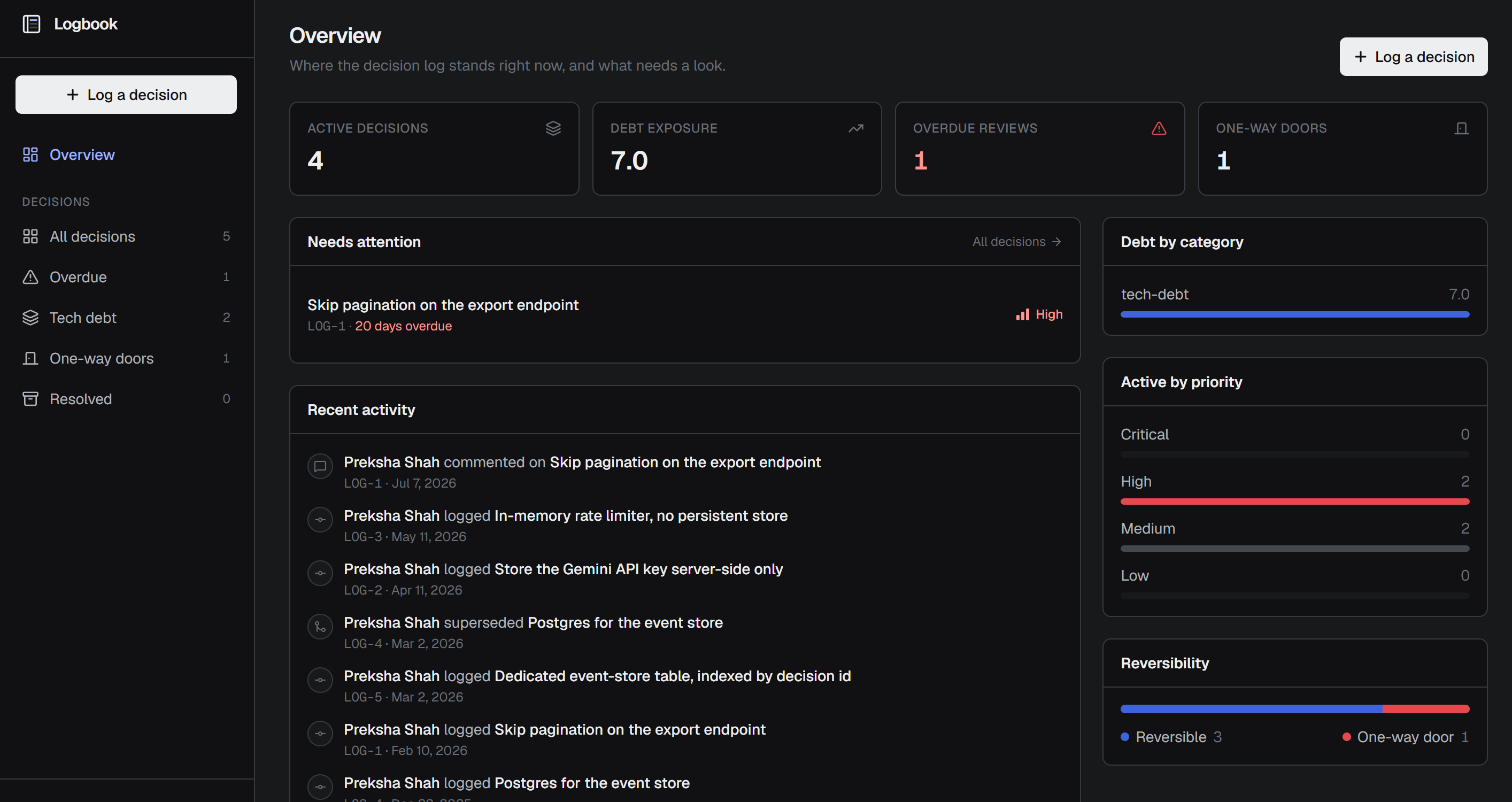
- Every change (created, commented, resolved, superseded) is captured as an event, so each decision has a full activity timeline
- Versioned state, so a schema change does not break existing data
- Search, sort, a keyboard shortcut to create a decision, and toast feedback on actions
In the product
Swipe or click through a few screens from the working app.
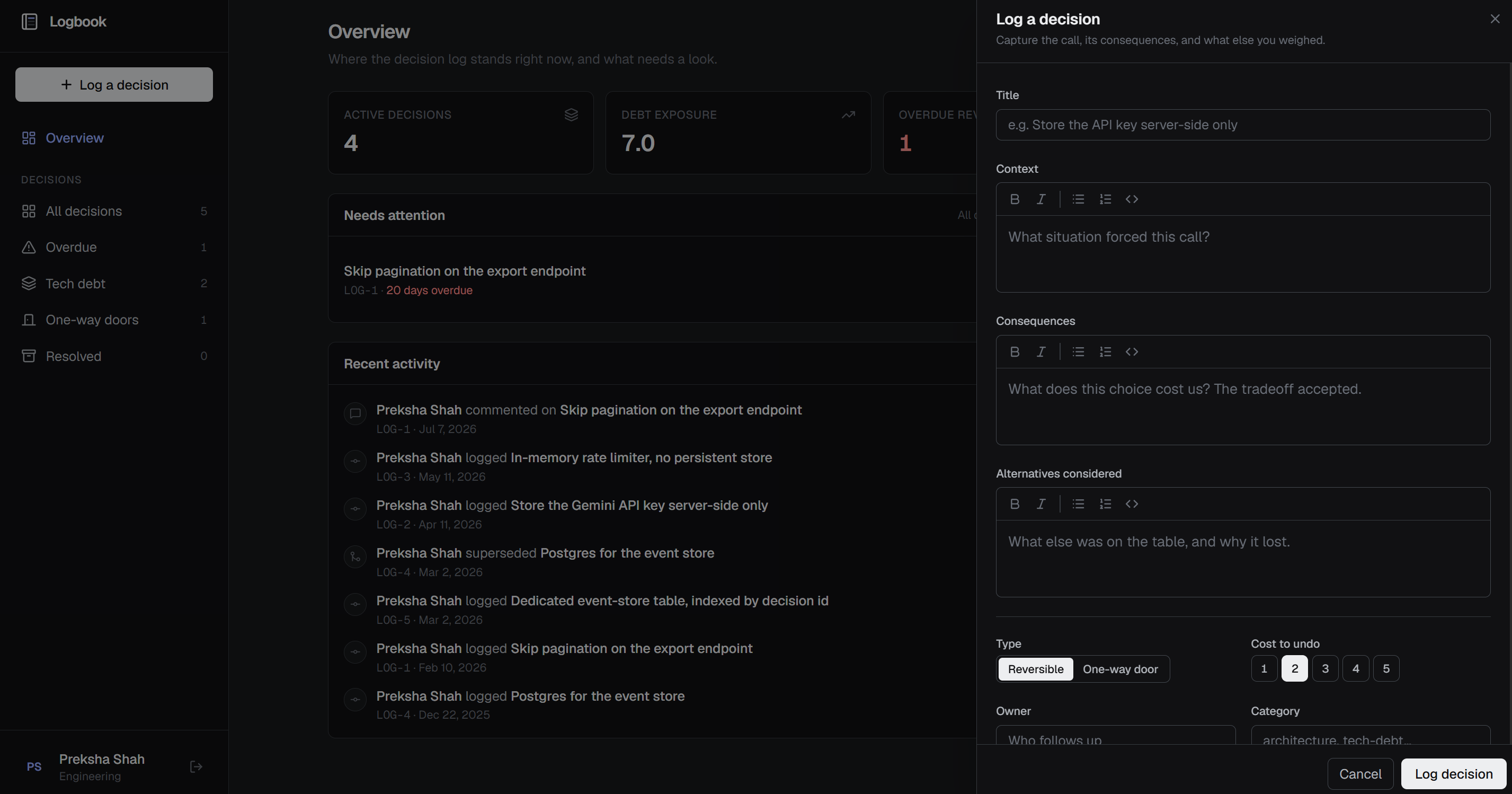
The log-a-decision form in Logbook, capturing context, consequences, and alternatives considered, plus type and cost to undo
Architecture decisions
The calls that shaped the build, written the same way the product itself records them.
Domain logic, not UI logic
The decision model, overdue detection, risk scoring, and the supersession chain all live outside React, framework-free and deterministic. The rules that decide what counts as risk don't depend on how anything gets rendered.
Supersession, not editing
A registry that quietly loses history when someone changes their mind is not a registry. Revisiting a decision creates a new record linked to the old one instead of mutating it.
Risk scoring, not just a due date
Risk score combines cost-to-undo with an urgency multiplier that rises the longer a decision sits overdue, capped rather than open-ended, so the dashboard ranks what actually needs attention first.
Want something built with this kind of judgment?
A focused 30-minute call to scope the work and see if it is a fit. No pitch.